
Photographs from the anatomical collection of
Museum Vrolik,
Academic Medical Center,
Universiteit van Amsterdam
February 2008

Thoracopagus tetrabrachius (conjoined twins)
The Museum Vrolik is centered on the tremendous number of objects collected by Gerardus Vrolik (1775-1859) and his son, Willem Vrolik (1801-1863) — both of whom served as professors of anatomy at Athenaeum Illustre, the forerunner to the University of Amsterdam. Gerardus began amassing his thousands of anatomical, botanical and zoological specimens in 1795, which Willem later continued to add onto and distill into academic categories. This private collection came to be known as Museum Vrolikianum.
Willem Vrolik was a pioneer in the field of teratology (the study of “monsters”) — which had been systematized by Vrolik's French contemporaries, the anatomists Etienne Geoffroy Saint-Hilaire (1772-1844) and Isidore Geoffroy Saint-Hilaire (1805-1861). Willem published several monographs on teratological subjects, but is best remembered for his Handboek der ziektekundige ontleedkunde (Handbook of Pathological Anatomy, 1842) and Tabulae ad illustrandam embryogenesin hominis et mammalium tam naturalem quam abnormem (Plates illustrative of Normal and Abnormal Embryogenesis of Man and the Mammalia, 1844-1849), the latter of which earned Vrolik a prize from France's Académie des Sciences.
When Willem Vrolik died, the collection he and his father had worked so long to assemble was threatened with dispersal through public sale. However, a committee of concerned Amsterdam citizens managed to purchase the collection in its entirety, and then donated it to the department of anatomy of Athenaeum Illustre in 1869. There it continued to instruct generations of medical students. Over the years several more collections joined the original Vrolik specimens. Since 1994, 150 specimens of congenital abnormalities have been on public display at the Academic Medical Center.
Special thanks to Dr. Roelof-Jan Oostra, curator of Museum Vrolik, who allowed me to work with this fantastic collection.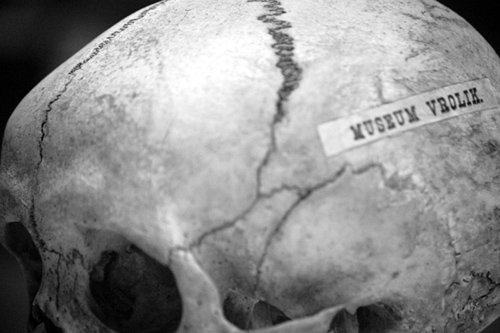
A human skull with a sticker that reads 'MUSEUM VROLIK'.
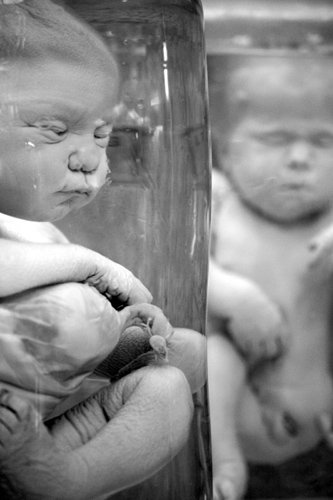
Two abnormal human fetus specimens preserved in glass jars.
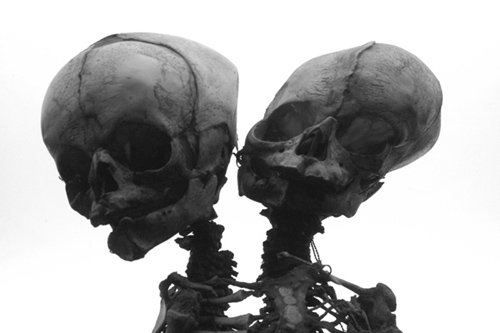
Conjoined skeleton
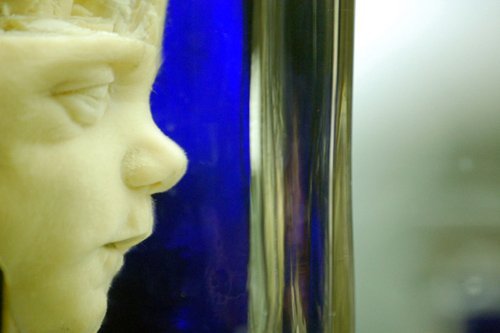
Profile
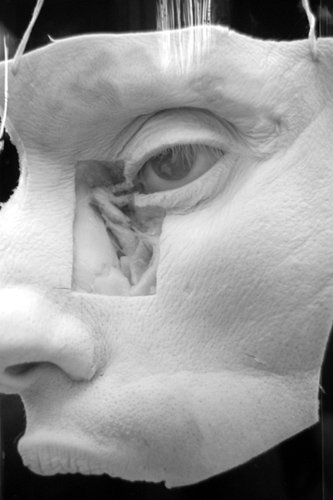
Close-up of a an anatomical preparation of a human face with a cutout revealing a underlying blood vessels and nerves.
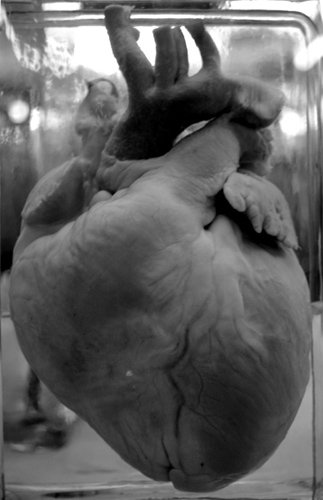
Corazón
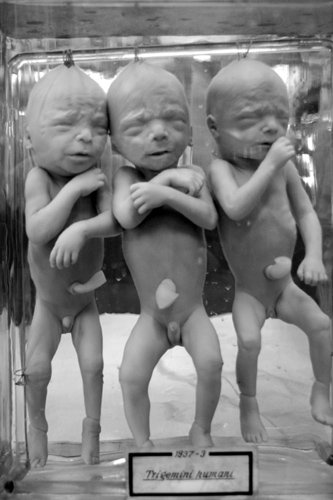
Preserved stillborn triplets, with medical label on glass container.
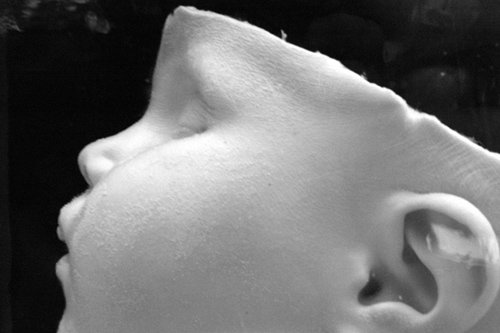
Close-up of a dissected head, profile view with eyes closed, in black and white.
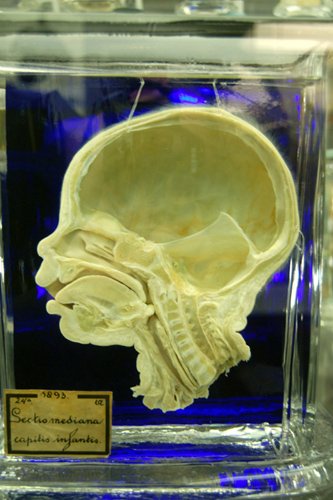
A biological specimen of a human skull, side view, displayed in a glass case with a label.
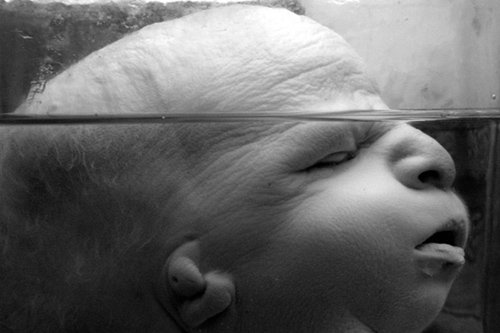
A preserved specimen partially submerged, with waterline crossing the face.
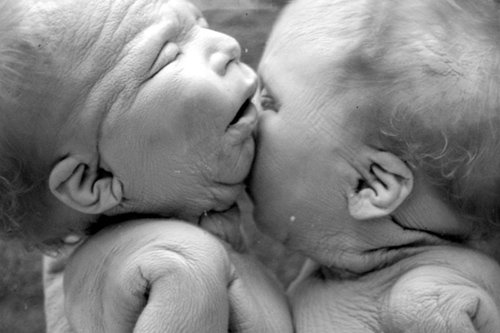
Close-up of preserved conjoined twins, in black and white.
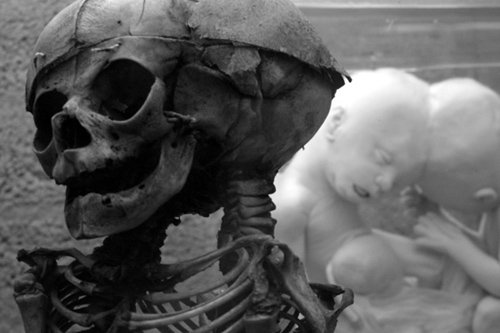
A skeleton of conjoined twins joined at the head in the foreground, and a preseved specimen of simialr twins in the background.
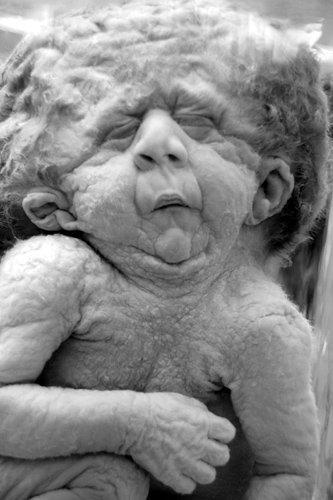
Close-up of a preseved conjoined twin specimen.
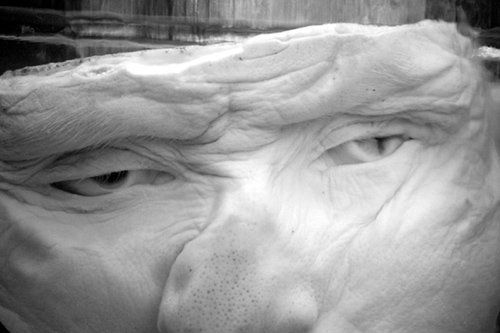
Close-up of a man's dissected face suspended in alcohol with the nose pressed against the glass.
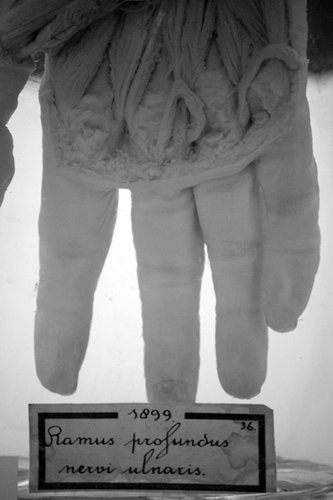
Ramus profundus nervi ulnaris - Dissected hand displaying muscles and nerves of the palm
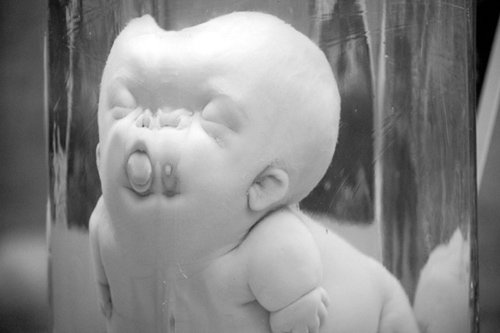
A preserved specimen of an abnormal human fetus is a square glass container, with facial features distorted and exagerrated by the curve of the glass.
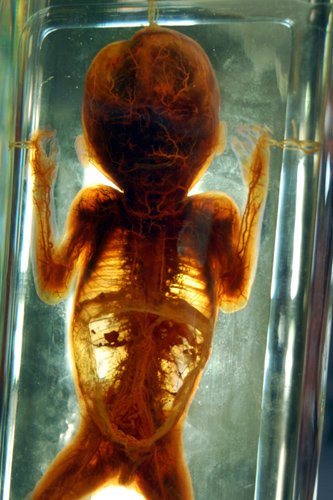
Human fetal specimen preserved in a transparent container for biological study.
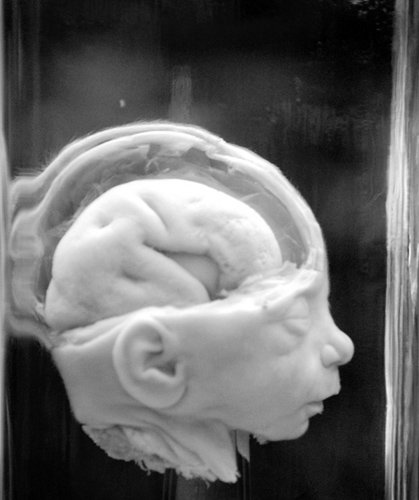
An anatomical preaparation of a human head with the top portion removed, revealing a brain inside. The head is displayed side view, positioned against a dark background.
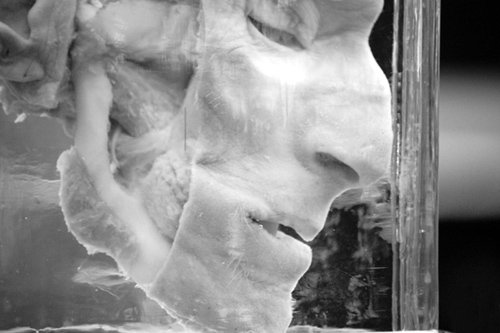
Close-up of a partially dissected human face behind glass, in black and white.
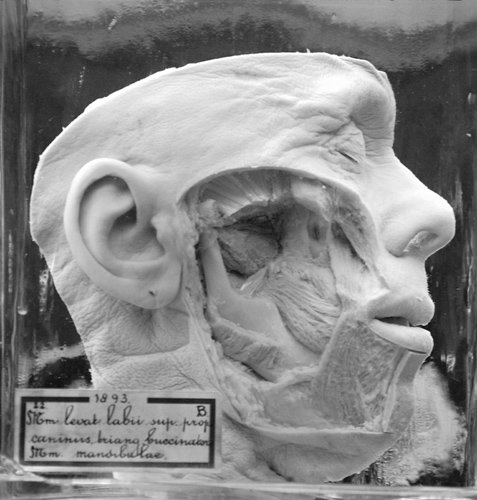
A detailed anatomical preapration of the side of a human head showing muscles and internal structures.
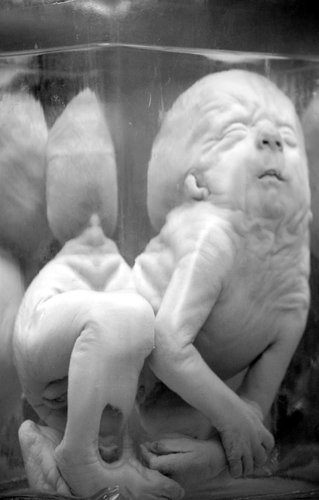
A preserved abnormal fetus floating in alcohol, with a distoted reflection from the back of the glass container.
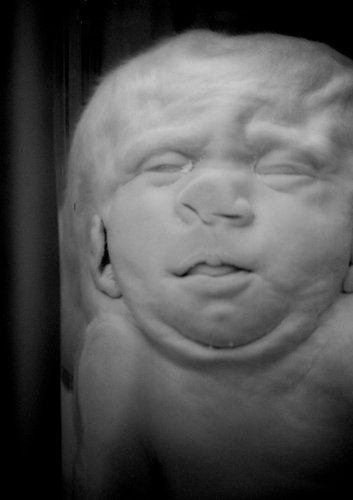
Close-up of the distorted face and torso of an abnormal fetal speciamen preserved in a glass jar, in black-and-white.
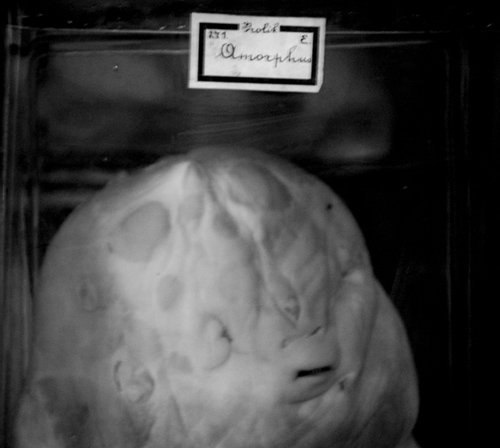
Amorphus
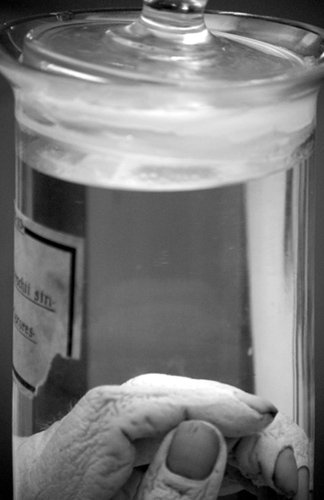
A hand preserved in a labelled glass jar with a lid on top.
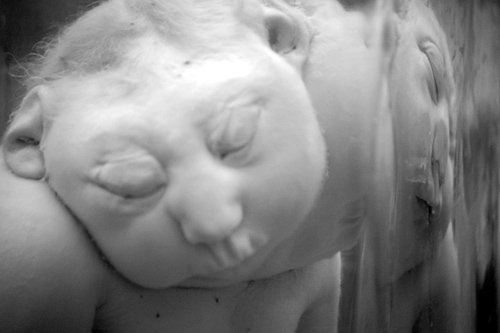
Close-up of a preserved two-headed fetus its faces pressed against a glass surface, creating a distorted reflection.
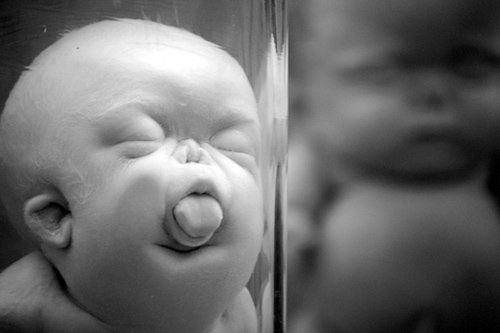
A presevered abnormal fetus with eyes closed and tongue protruding in a black-and-white photo.
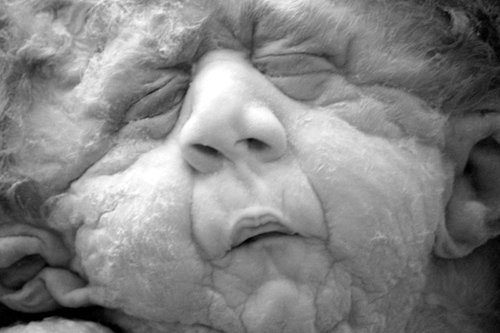
Close-up of a presevered abnormal fetal speciman, showing delicate features and soft wrinkled skin.
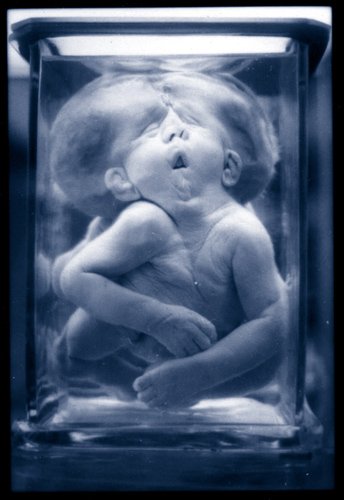
A preserved conjoined twin specimen baby inside a square transparent container filled with alcohol, arms pressed against the sides.
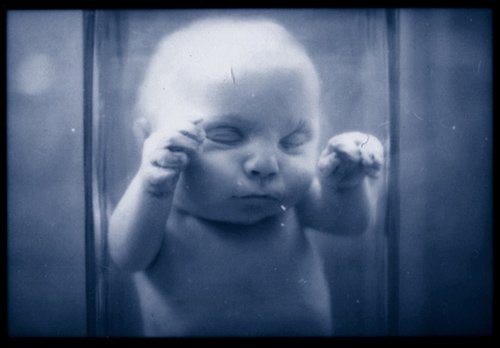
A presevered specimen of an abnormal fetus with closed eyes and clenched fists pressing against a glass surface.
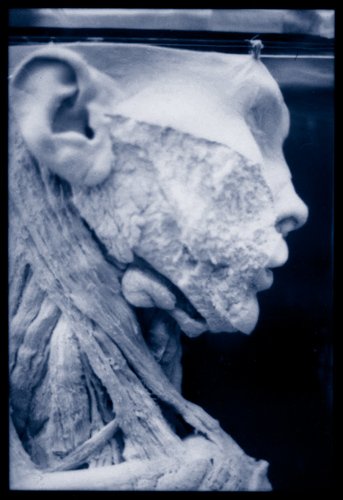
Prosection - Anatomical preparation showing the muscles and glands of the neck
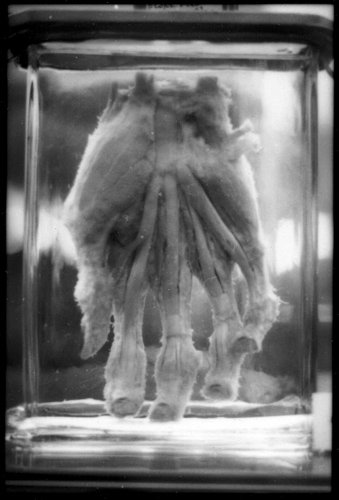
A dissected human hand submerged in a glass container.
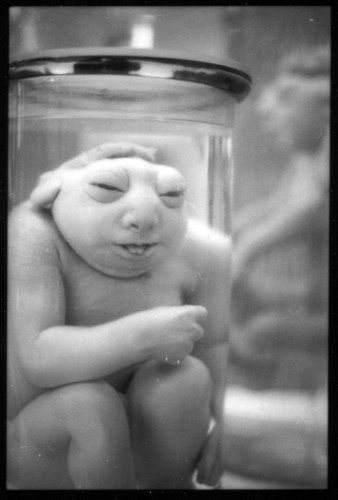
A surreal black-and-white photo of an ancephalic fetus inside a glass jar.
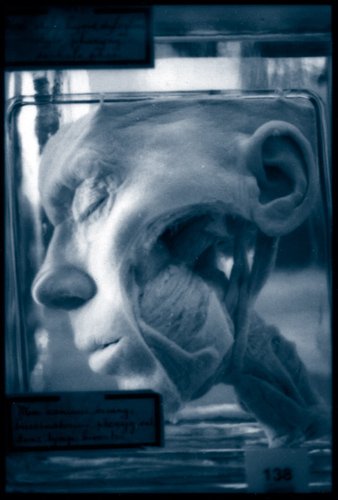
Close-up of a partially dissected human face showing the inner structure of mouth and jaw, seen through a glass display case with informational labels.
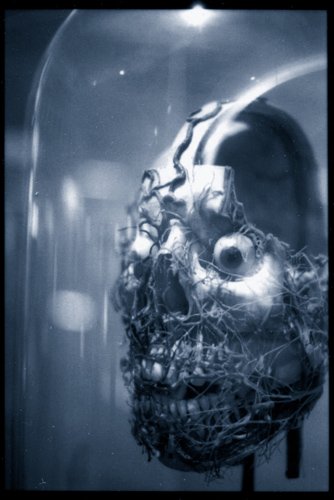
Model of circulation
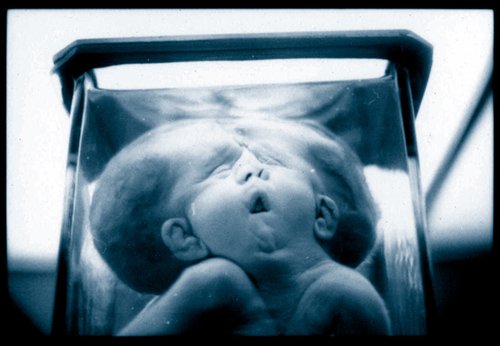
Rising together
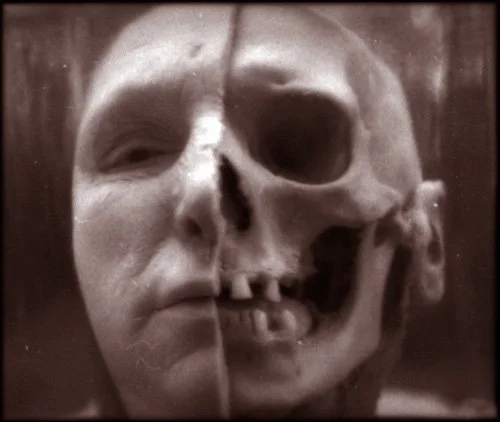
What lies beneath