
Photographs from the anatomical collection of
Universiteitsmuseum Groningen
February 2008

Teratology specimens from the holdings in the Museumdepot
Rijksuniversiteit Groningen is one of the oldest in the Netherlands, founded in 1614. Right from the start, the university constructed an anatomy theater and enabled its faculty to acquire specimens and instruments suitable to teaching. With the assistance of Willem I of the Netherlands in 1820, the university purchased the private collection of anthropologist and anatomist Petrus Camper (1722-1798), who had served as Groningen's chair of anatomy, surgery and botany; and whom the German writer Johann Wolfgang von Goethe (1749-1832) described as a “meteor of spirit, science, talent and activity.”
Petrus Camper was a pioneer of comparative anatomy. In his lively lectures, Camper demonstrated similarities between the physical structures of humans and animals through a drawing process he dubbed metamorphosis. As may be expected of a man with such wide-ranging interests, Camper's collection included specimens from the fields of anatomy, pathology, geology, and zoology (unfortunately, a large portion of the latter collection was lost to a fire in 1906). Presently, there are about 200 of Camper's original preparations in the university's holdings.
Augmenting the Camper collection, in 1831 the university also acquired the private collection of anatomist Pieter de Riemer (1769-1831). De Riemer's collection consists of more than 900 preparations, including many interesting examples of pathology.
The Anatomical Museum (Anatomisch Museum) maintained and displayed the anatomy and pathology collection from 1908 through 2003. Since then, management of the collection has been placed under the umbrella of the Universiteitsmuseum Groningen and the majority of the anatomical holdings are stored and conserved in the Museumdepot.
Special thanks to John Le Grand, keeper of the Anatomisch Museum, who very generously revealed to me the outstanding and extensive holdings of the Museumdepot, discussed the collections, and brought out several teratology specimens which he thought — quite correctly — would interest me. I could not have hoped for a more genial and accommodating host.
Close-up photograph of preserved conjoined twins, partially dissected, inside a glass container for display or study.

Close-up portrait of the faces of presevered conjoined twins with closed eyes facing each other, against a blue background.

Close-up black-and-white photo of presevered two-headed conjoined twins, with eyes closed and one with a slightly open mouth.
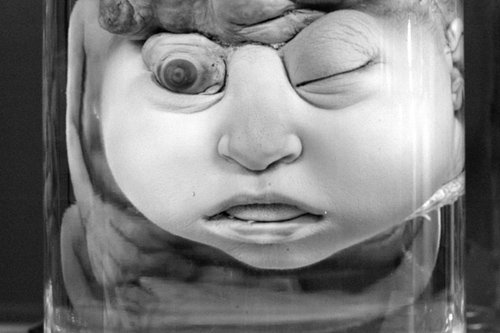
A close-up of a human head with a distorted face, submerged inside a glass container.

A close-up image of a preserved conjoined twin specimen, displaying a severely deformed face and enlarged cranium.
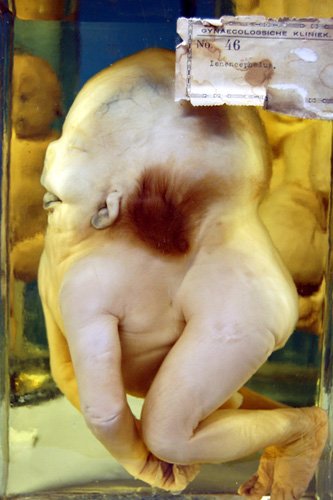
An abnormal human fetus submerged in a jar of preservative liquid on display in a museum.
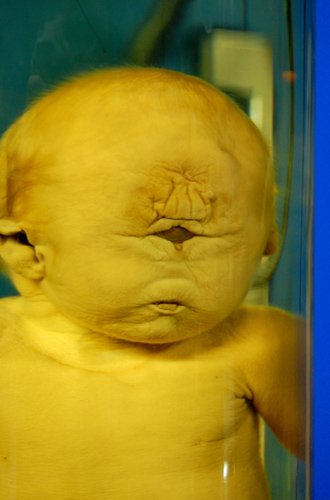
An abnormal human fetus with cyclopia submerged in a jar of preservative liquid on display in a museum.

Close-up of conjoined twins submerged in a jar of preservative liquid on display in a museum.

Close-up of three abnormal human fetuses submerged in jars of preservative liquid on display in a museum.

Close-up of the deformed face of a human fetus submerged in a jar of preservative liquid on display in a museum.

Close-up of the hands and legs of conjoined twins floating above the bottom of a jar of preservative liquid on display in a museum.

Close-up of an abnormal human fetus submerged in a jar of preservative liquid on display in a museum, present the right arm without a hand.

Close-up of an abnormal human fetus submerged in a jar of preservative liquid on display in a museum.

A black and white photograph of conjoined twins submerged in a jar of preservative liquid on display in a museum.

A close-up of portrait of conjoined twins submerged in a jar of preservative liquid on display in a museum.

Close-up of a conjoined twins submerged in a jar of preservative liquid on display in a museum.
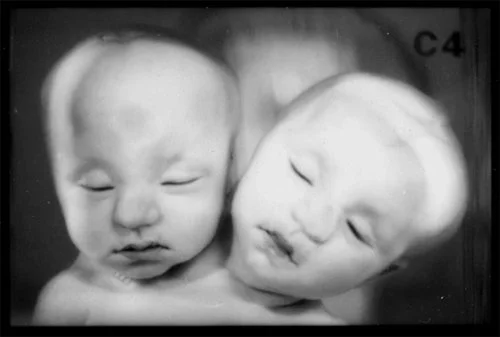
A close-up of portrait of two-headed conjoined twins submerged in a jar of preservative liquid on display in a museum.

A black and white photograph of conjoined twins submerged in a jar of preservative liquid on display in a museum.
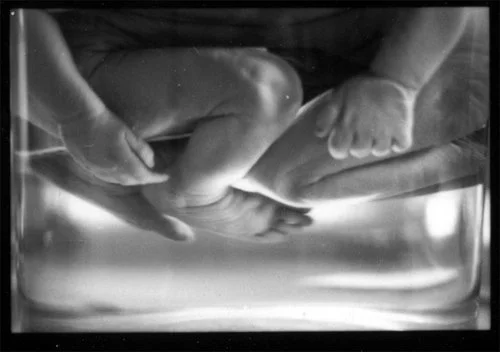
Close-up black-and-white photo of the hands and legs of conjoined twins floating above the bottom of a jar of preservative liquid on display in a museum.

A black and white photograph of a child with an unusual facial appearance, showing a large head with facial deformities, submerged in a jar of preservative liquid on display in a museum.

Close-up black and white photo of two-headed conjoined twins submerged in a jar of preservative liquid on display in a museum.

Multiple glass jars filled with preserved human fetus specimens displayed on a white table in a museum setting.