
Photographs from the anatomical collection of
Musée Dupuytren
Faculté de Médecine,
Université Pierre & Marie Curie,
Les Cordeliers, Paris
February 2008

Hydrocephalus skeletons
Musée Dupuytren is a medical museum in Paris named for the prominent French military surgeon and anatomist Guillaume Dupuytren (1775–1835). Established in the year of Baron Dupuytren’s death and at his bequest by Spanish toxicologist Mathieu Orfila (1787-1853), the museum initially gathered collections from throughout the faculty of Université de Paris. By the 1840s, the first catalog listed over a thousand specimens, and this number had grown to more than six thousand by the 1870s.
At the time of my visit in 2008, the collection was housed at 15, rue de l'École de Médecine, Les Cordeliers, within the Faculté de Médecine of Université Pierre & Marie Curie, which has since been merged into Sorbonne Université. Despite continually adding important anatomical specimens and medical artifacts to the collection, the museum suffered several periods of decline and neglect. It was shuttered in 1937 and in the decades afterwards many specimens were lost or damaged through neglect. However, the museum was refurbished and reopened in 1967, only to close again in 2016 due to building upkeep and accessibility issues.
Following its closure, the museum was then officially moved to Sorbonne Université’s Campus de Jussieu (also known as Campus Pierre-et-Marie-Curie), where it is available to students and faculty but only open to the public during special events. Prior to the move, some of the collection was reportedly transferred to the Musée d'Histoire de la Médecine, located across the street from Les Cordeliers.
Special thanks to Dr. Patrice Josset and the staff of Musée Dupuytren for allowing me access to their collection.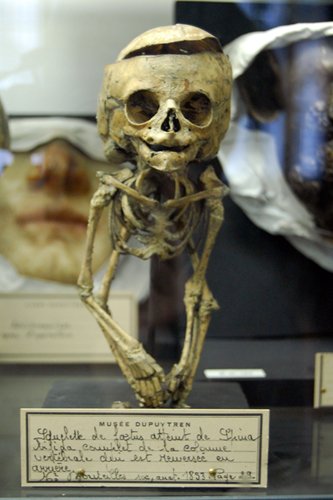
Spina bifida
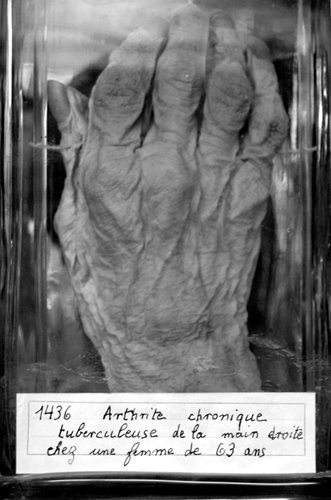
Arthrite chronique
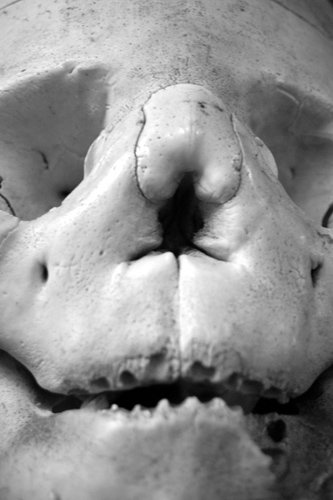
Hyperostosis
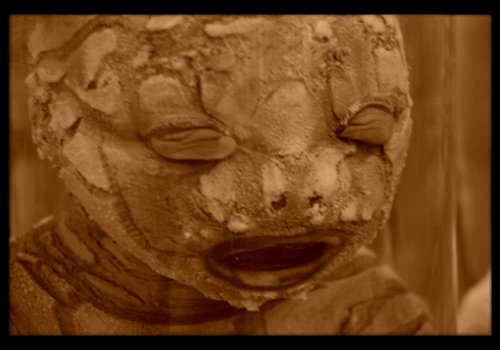
Harlequin ichthyosis
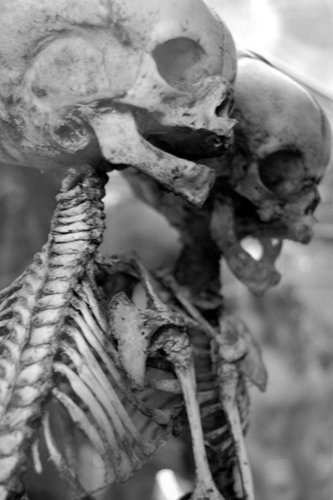
Skeleton of twins conjoined at the ribcage.
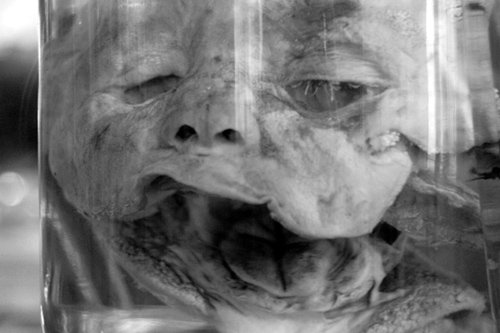
Close-up of a preserved abnormal fetal specimen in a glass jar.
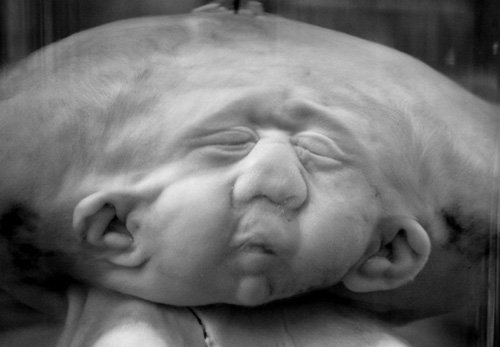
Black and white photo of a preserved conjoined twin speciman with an unusually enlarged head, closed eyes, and prominent facial features.
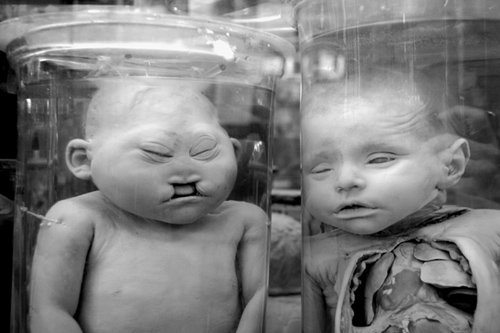
Two infants in glass containers showing distinct facial expressions.
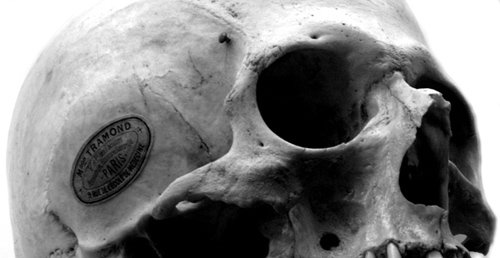
skull from Maison Tramond
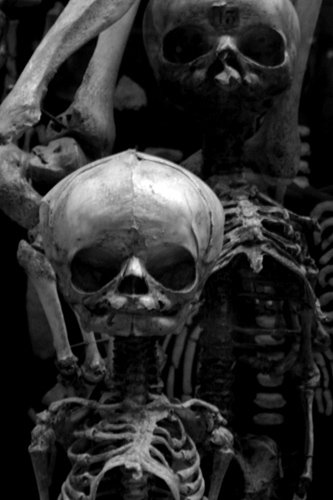
Several human skulls and Skeletons arranged together, with prominent skulls in the foreground.
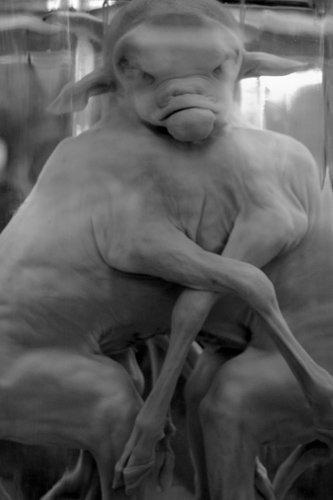
A preserved specimen of a conjoined calf with a distorted face in a glass container.
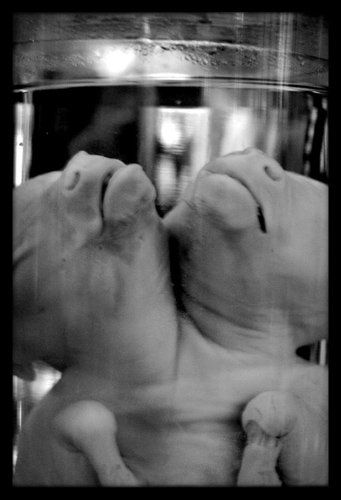
Preserved specimen of a two-headed calf in a glass container, captured in black and white.
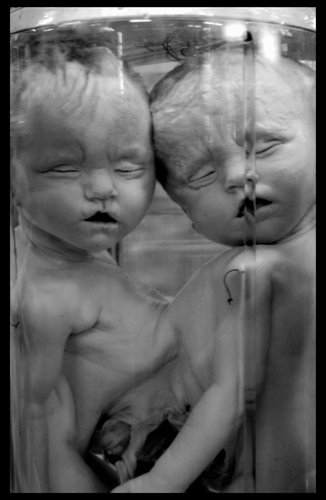
Preserved specimen of conjoined twins, shown through a glass surface in black and white.
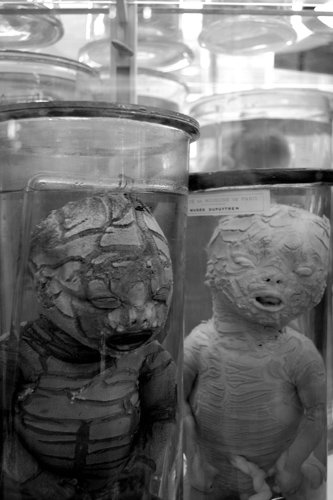
Two preserved biological specimens in glass jars, both depicting abnormal skin conditions, in a museum setting.
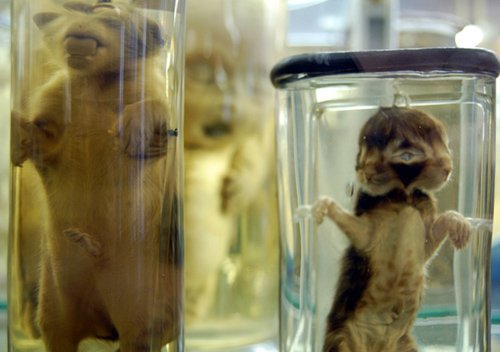
Preserved specimens of abnormal kittens in a tall glass jars.
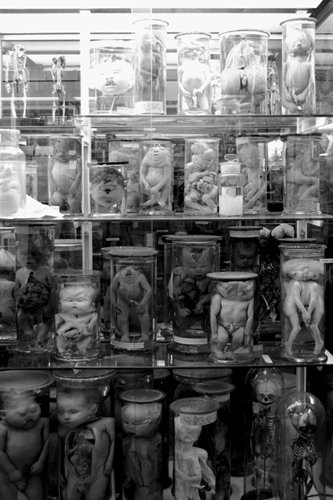
Display of preserved anatomcial specimens in glass jars at a museum exhibit.
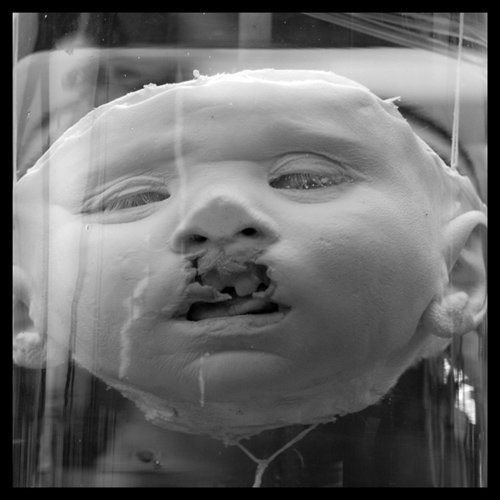
Preserved specimen of an abnormal fetus with cleft palette.
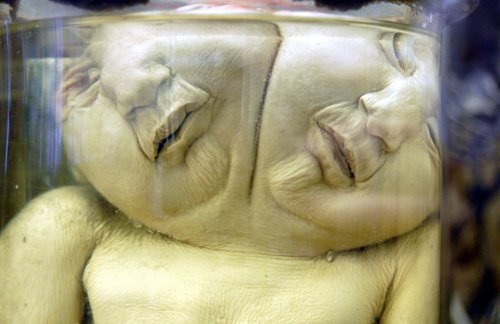
Preserved specimen of two-headed conjoined twins submerged in liquid with eyes closed.
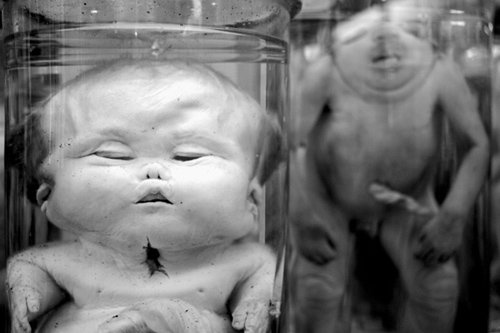
Several jars containing biological specimens of abnormal fetuses displayed in museum exhibit for scientific study.
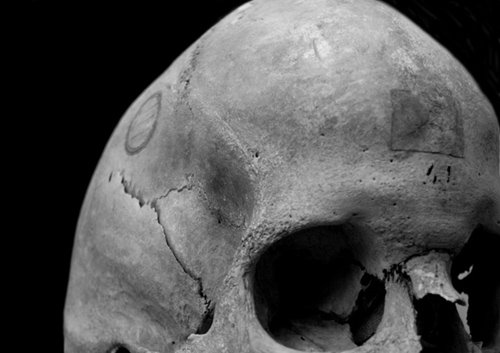
Skull No. 41
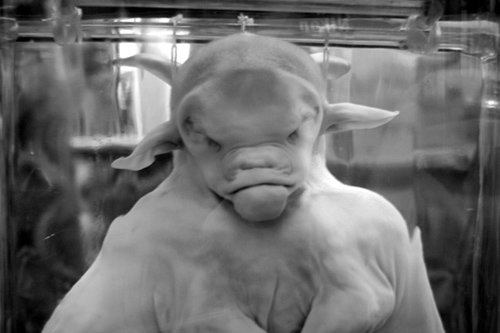
A close-up black and white photo of conjoined calves joined at the head inside a laboratory container.

A human skull of unusual thickness on display in a museum, labeled with descriptive tags.
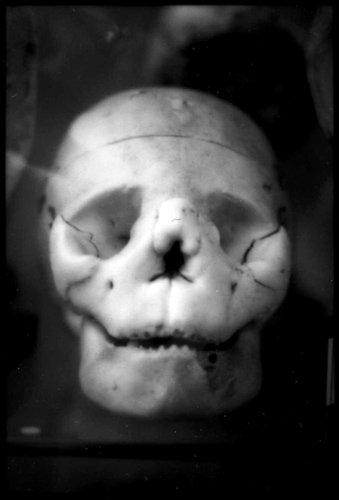
Hyperostosis - Excessive bone growth of the the skull
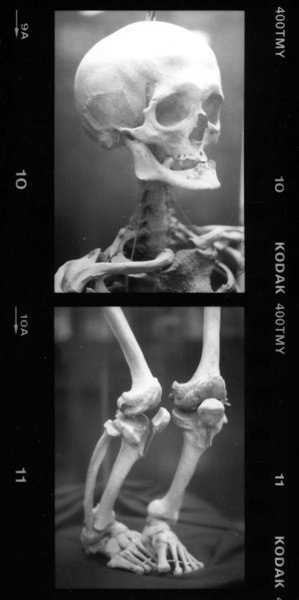
A black and white photograph composed of sequential exposures on a roll of 335 mm film showing a human dwarf skull and skeleton, with the skull shown in profile view at the top and the skeleton's lower limbs at the bottom.
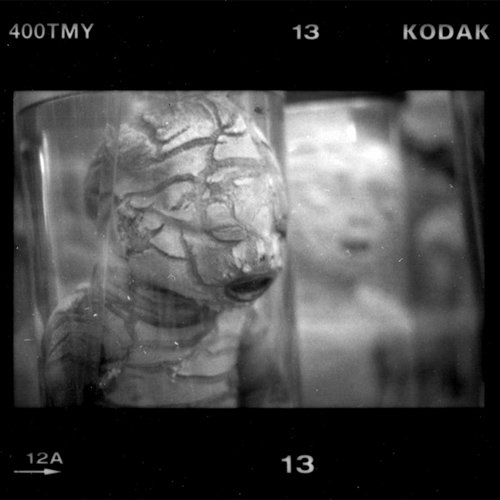
A black-and-white photo from a roll of 35mm film, showing two preserved abnormal fetal specimens in glass jars, with the film labels from the negative appearing at top and bottom.
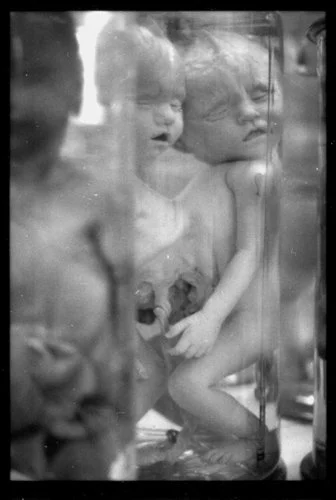
Preserved abnormal fetus specimens preserved in glass conatiners, with conjoined twins in the background more clearly in focus.
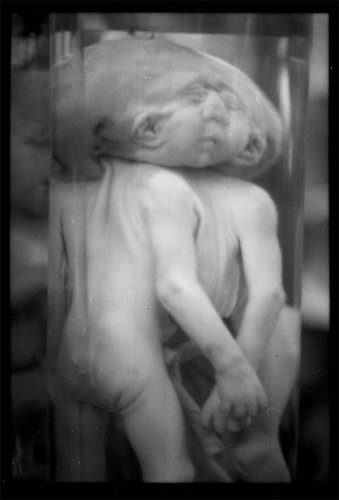
A preserved human conjoined twin fetus inside a glass container for display or study.
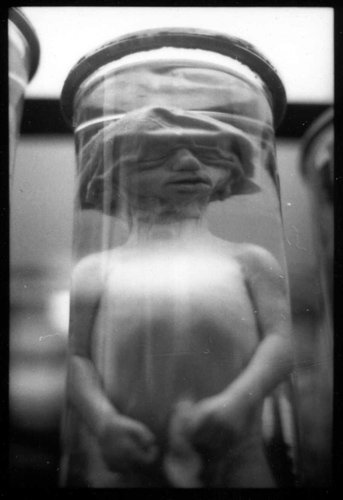
A preserved abnormal human fetus inside a glass container for display or study.
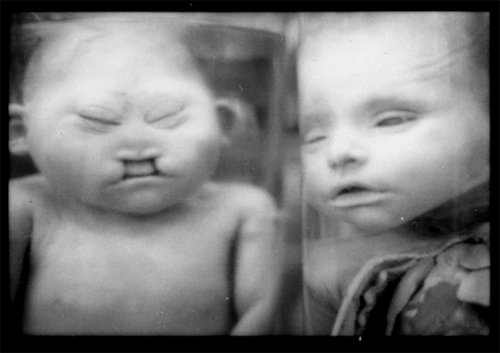
Close-up black and whiteof preserved abnormal human fetuses displayed side by side inside glass containers for study, one with eyes closed and a cleft palette, the other with eyes open and mouth closed.
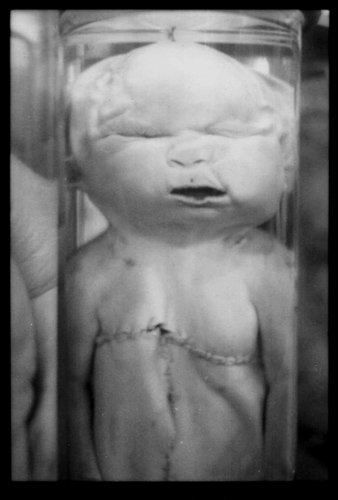
A preserved abnormal human fetus inside a glass container for display or study
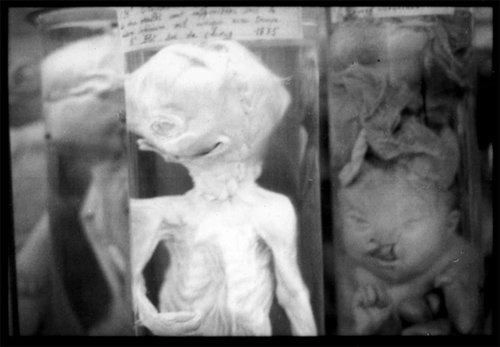
Black and white photo of a medical exhibit showing variety of deformities for study.
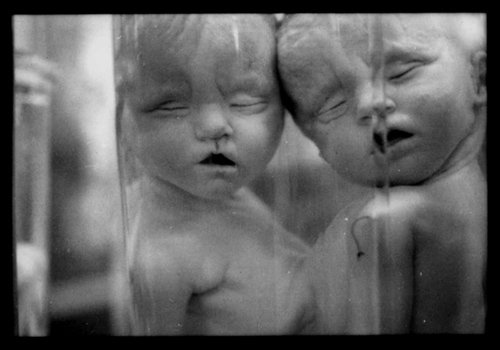
Close-up of preserved conjoined twins inside a glass container for display or study.
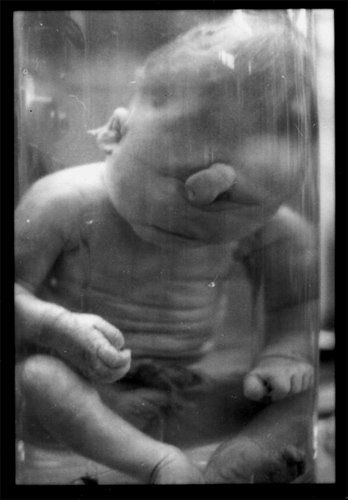
Black and white photo of preserved abnormal human fetus inside a glass container for display or study.
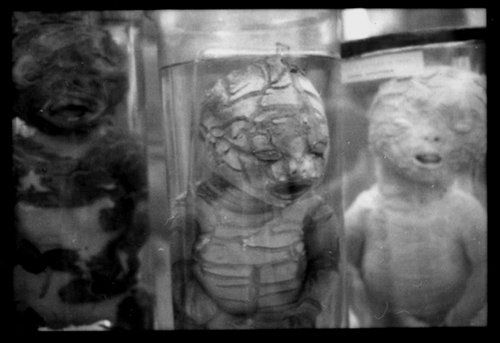
Black and white photo of three preserved abnormal human fetuses inside glass containers for display or study.
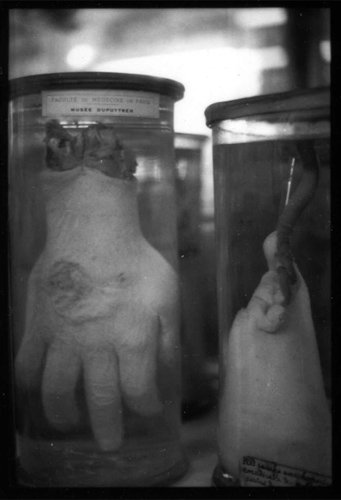
Preserved human hand and foot in glass jars on a shelf.
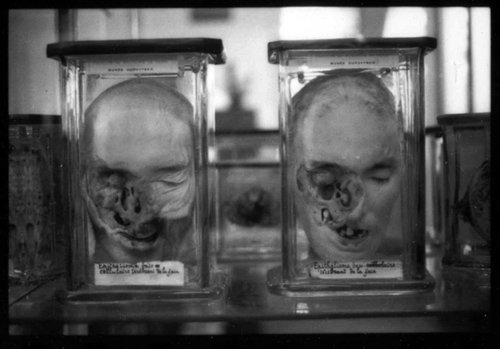
Matched set
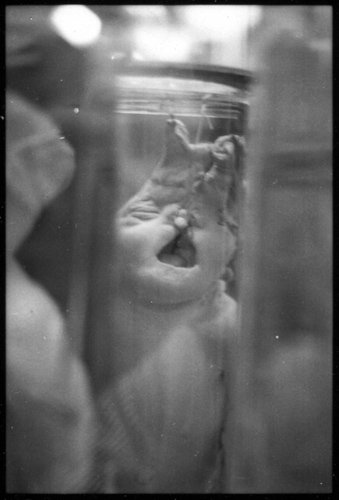
Black and white photo of preserved abnormal human fetuses inside a glass container for display or study.
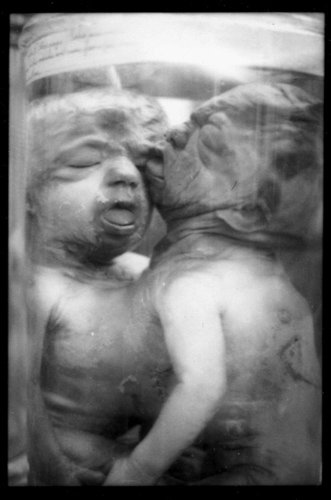
Black and white photo of preserved conjoined twins inside a glass container for display or study.

Wunderkammer